
THE NORTH CENTRAL EXPLORER'S TRAIL
About The Area
This 9,000-acre reservoir in the scenic Post Rock Country is a must-stop for birders in the central part of the state. It has a stable water level, due mostly to the salinity of the runoff and streams entering the lake. It drains extensive grassland areas, rather than production agricultural cropland, providing what has been described as the clearest lake in the state. The salinity of the lake is problematic for use of the water as a source for crop irrigation or domestic household use. Until desalinization technology changes, the lake should be reliable water bird habitat. Many parks provide good birding spots. Keep in mind that State Parks require a permit to enter, whereas Corps of Engineers parks have no entrance fee. Here are some of the best birding locations and the birds which have been seen at each.
THE NORTH CENTRAL EXPLORER'S TRAIL
About The Area
Wilson State Park offers great birding opportunities for much of the year. The state park has two separate areas divided by Hell Creek Cove and connected by Hell Creek bridge. The Hell Creek area is the largest part of the park, with several campgrounds, day-use areas and other facilities. The only marina on the lake is located there, and the rocky bluffs and coves are sometimes very productive. The rock formations around Lake Wilson Marina have hosted Rock Wrens in all seasons, with Say’s Phoebes sometimes nesting in the area as well. The pine and eastern redcedar trees in that area are good for Mountain Bluebird, Townsend’s Solitaire, Fox Sparrow and other winter residents. There are many vantage points in this park to view the lake, with great birds seen including all the loon (including a Yellow-billed Loon in 1995 and 2020) and grebe species, as well as abundant waterfowl and many gull species including rarer ones like Black-legged Kittiwake, Sabine’s, Glaucous, Iceland and both Great and Lesser Black-backed Gulls. Summer residents include Blue Grosbeak, Lark and Field Sparrows, and in recent years a somewhat predictable Painted Bunting or two at the park office.
The Otoe area of Wilson State Park has a concrete trail (Cedar Trail) that has hosted Long-eared and Barn Owls, Mountain Bluebirds, and Townsend’s Solitaire in fall and winter. It has also been great for winter finches, including Red Crossbills and Purple Finches in the past. It is a small park but offers vantage points to scan for water birds. The undeveloped area southwest of the Hell Creek Bridge and the Hell Creek area has been great in the past, with a wintering Rufous-crowned Sparrow present in 2011-12. Other good birds seen from that location include Trumpeter and Tundra Swans, many species of waterfowl and gulls, and recently Bewick’s Wrens and a surprise visitor from the southwest, a male Vermillion Flycatcher.
THE NORTH CENTRAL EXPLORER'S TRAIL
About The Area
Minooka Park has beautiful vistas and dramatic scenery as you enter the area from the south. It is great for Mountain Bluebirds in winter and hosts a great variety of raptors in fall and winter including Red-tailed Hawks of many subspecies and color forms, Rough-legged Hawks, and an occasional Golden Eagle. There was even a sighting of a Gyrfalcon from the entrance road into the park. As you travel down the large hill into the public property, bear left and down that gravel road to the West Minooka Boat Ramp. This is a great place from which to scan the lake and is probably the best spot on the entire reservoir to see loons and grebes. Waterfowl species are also abundant in this part of the lake, especially diving ducks such as goldeneye and mergansers. There is also some good coniferous tree habitat nearby, with the Prairie Fire Nature Trail providing access to many interesting species, especially in winter. This location was ravaged by wildfire in recent years, so there are lots of tree skeletons for birds to perch from. Red-breasted Nuthatch, Hermit Thrush, Mountain Bluebird, Fox Sparrow, Yellow-rumped Warblers and Red Crossbills have all been observed here. When traveling to the main part of Minooka where the campgrounds are located, be sure to go to the high points as they have proven great locations for looking at waterfowl, loons and grebes. The only accepted Kansas record for Bean Goose was observed from the center part of this park. At the very east end of the park is the East Minooka Boat Ramp. It provides a vantage point to a large part of the lake looking towards Lucas Point and was the location for the sighting of the first alcid species for Kansas, a Long-billed Murrelet, in November 1997. Marshall Cove, located on the southeast side of Minooka Park, is also a good location to check for waterfowl, loons, grebes, and many other species. It is protected from winds and choppy waves and has produced some interesting species (all three scoters, Long-tailed Duck, Snow Bunting), mostly in fall and winter.
THE NORTH CENTRAL EXPLORER'S TRAIL
About The Area
It has a large hill overlooking the lake as you enter the area, which is known to locals as “Hang Glider Hill.” Visitors indeed hang glided there, as well as use it as a launching point for model airplanes. It is a great location for raptors, especially Bald Eagles, Turkey Vultures and a variety of hawks, using the updrafts created by the long slopes. Upon entering the main park area just past the fee booth, Rocktown Hiking Trail winds to the west through open grassland and loops around by Rocktown Cove. It has some dramatic rock formations, with Rock Wren, Say’s Phoebe, Barn Owl and other birds possible. The scenery is well worth the walk. As you go further to the south into the park, there are some large shelterbelts with pine and cedars present on the left side of the main road. Check them for owls, winter finches, Hermit Thrush and sparrows in the fall/winter. There is a decent cove for waterfowl and grebes in the middle of the park and good lake visibility from the east, south and west sides of Lucas Point. This Park has been good place to look for Snowy Owls during irruption years into the state.
THE NORTH CENTRAL EXPLORER'S TRAIL
About The Area
This small area has proven to be a great birding location and is worth checking in all seasons. The area along the Saline River channel is good for waterfowl, sparrows, Belted Kingfisher and others. The seep stream channel, on the northeast side of the campground and the Bur Oak Trail are dependable for many birds of interest, with Virginia Rail and Marsh Wrens usually there in all but the summer months. It has ample cattails and typically a beaver pond that attracts some waterfowl. Pine trees in the area have had nuthatches, sapsuckers, kinglets and winter finches. The shelterbelt along the Bur Oak Trail is great for sparrows and other passerines during most seasons. This entire area has been known for holding some unusual species during the Christmas Bird Count period, including Brown Thrasher, House Wren, Common Yellowthroat, and Pine Grosbeak.
THE NORTH CENTRAL EXPLORER'S TRAIL
About The Area
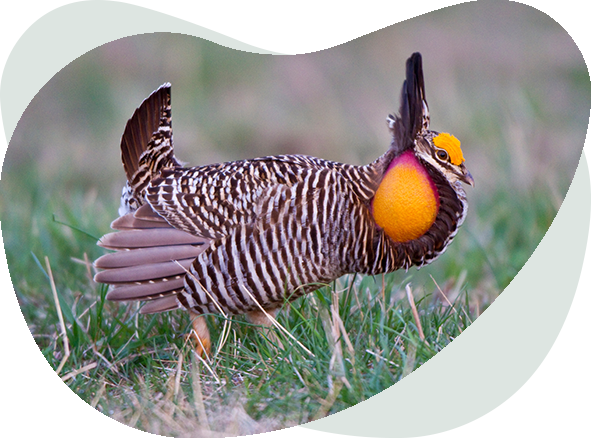
Over 100 species have been seen on this 160-acre property which is a diverse mix of wetland and upland habitat. When full, the basin has about 45 acres with shallow water. Spring is generally the best time to observe a good variety of ducks due to hunting and drier conditions in the fall. Herons, egrets, terns, coots and grebes also occur during spring and early summer. This is an excellent site for shorebirds in May and again in late summer. There is circumstantial evidence that stunning Black-necked Stilts sometimes nest here. You will probably first note their dapper black and white plumage rising above the vegetation, but don’t miss checking out their long hot pink legs!
About 50 acres of high-quality Smoky Hills prairie can be found in the southeast corner of the property. Northern Bobwhite and Ring-necked Pheasant can be found in the surrounding fields. During summer listen for the insect-like buzzing of Grasshopper Sparrows and the endlessly repetitive calls of Dickcissels. Year-around you can find both Eastern and Western Meadowlarks. These two species are best identified by their songs.
THE NORTH CENTRAL EXPLORER'S TRAIL
About The Area
Of the 5,124 acres of wildlife habitat, over 1,900 acres are wetlands. Being along a major migration route for the Central Flyway, this is a key stopover site for migrating waterfowl and shorebirds. Spring is the best time to visit because the area is intensely managed for hunting in the fall. Many areas have restricted access or hunter only access. During late spring and summer, the wetlands are brightened by Yellow-headed Blackbirds, Common Yellowthroats and Yellow Warblers.
One of the ways of birding this area is by driving as loop as follows: Go north out of Jamestown on N. 40th Street 1 mile to Vale Rd. Turn left, go 1 mile to 30th Rd. Just beyond this intersection is a parking lot that provides access to an area along Marsh Creek. Return to the nearby intersection, turn left and go north 2 miles to Zeal Rd. Turn left and go west 2 miles and just as the road curves north turn left and go south on 30th Rd. As you proceed south on the right will be a spur road leading to a parking area providing a view of Gun Club Marsh. This birding hotspot has a list of about 140 species. You can continue south to where the road dead ends along Skunk Creek or you may wish to turn around and go north on 30th Rd. to Marsh Trail Rd. Turn left and go west across the bridge. The bridge area can be excellent for birding. Continue west 1 mile and then turn south on 20th Rd (becomes 10th). After about 2,5 miles and road on the left will lead to a parking area providing another view of the wetland. Finally, continue south on 10th Rd. until it intersects K-28. Stay south on K-28 as it curves around for 2 miles and then turn left and go north on 20th Rd.to the parking lot for Greenwing Marsh. From here take K-28 3 miles east back to Jamestown.
THE NORTH CENTRAL EXPLORER'S TRAIL
About The Area
Based upon the number of checklists submitted to eBird, this is the least birded of Kansas’s federal reservoirs. Yet, it has tremendous potential to offer excellent birding. Lovewell State Park offers many vantage points for waterfowl viewing. Roads wind through campgrounds and recreation areas. Additionally, birders might want to scan the lake from the south end of the dam returning to N. Shore Rd and going east to 260 Rd. Then driving south below the dam before taking the winding road up to the observation area after crossing the outlet area. Between K-14 and the State Park entrance along N, Shore Rd. you can find roads heading south to good viewpoints and birding spots along the northern shoreline. Heading east from K-14, the first road you come to takes you through excellent riparian woodlands along Montana Creek. This is part of the Lovewell Wildlife Area. The next road provides access to the lakeshore as does 230 Rd the next road to the east. Other roads heading south from N. Shore Rd. lead into the cabin area of the State Park.
As you can see there are numerous opportunities for viewing waterfowl here. However, equally interesting are the excellent riparian woodlands and upland oak and hickory forests. These can be found along Montana Creek and as you bird the roads south of the reservoir. Pileated Woodpeckers and Rose-breasted Grosbeaks nest here, and migrants undoubtedly make fine use of these wooded tracts.
THE NORTH CENTRAL EXPLORER'S TRAIL
About The Area
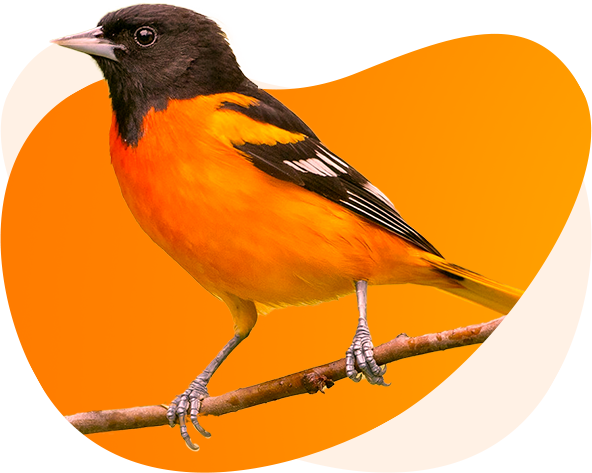
This 57-acre lake attracts a nice variety of dabbling and diving ducks during migration, including all three species of merganser. The lake is surrounded by native grass, scattered trees, and shrubby vegetation. Ring-necked Pheasant, Northern Bobwhite, Wild Turkey, and Mourning Doves may be attracted by the food plots which supplement the food provided by native plants and surrounding agricultural fields. Lark, Grasshopper, and Field Sparrows nest in the open grassland areas around the lake. Both Eastern and Western Meadowlarks, Eastern and Western Kingbirds and Orchard and Baltimore Orioles all can be found here adding color to the birder’s world.
THE NORTH CENTRAL EXPLORER'S TRAIL
About The Area
Glen Elder Dam impounds Waconda Lake, but either name may refer to the lake and entire area. Waconda Lake has about 12,500 surface acres of water. Glen Elder Wildlife Area is also about 13,200 acres of public wildlife lands. The main body of the lake is a little over 6 miles long. It runs from the dam at Glen Elder to the Cawker City causeway and averages about 2 miles wide.
Waconda typically holds a lot of winter diving ducks such as Common Mergansers and Common Goldeneye. Waterfowl can number in tens or even hundreds of thousands. On at least one occasion it was estimated that more than one million white geese (Snow and Ross’s) were present on and around the lake. When experienced birders think of Waconda; they often think of gulls. In winter there are particularly large numbers of Herring Gulls. Over the years many interesting gull species have been found here including Little, Sabine’s, Lesser Black-backed, California, Short-billed (formerly Mew), Iceland, and Glaucous.
The dam is a good place from which to scan the lower end of the lake. When most of the lake is frozen, waterfowl often keep a few open holes in the ice near the dam. Some good birds seen on or from the dam include American Black Duck, Surf and Black Scoters, Long-tailed Duck, Barrow’s Goldeneye, Pacific Loon, Snow Bunting, Snowy Owl, and Pomarine Jaeger. In season, scan the face of the dam for shorebirds such as Ruddy Turnstones or Willets. The dam can be a great place to see Bald Eagles in winter. Several dozen eagles have been seen at one time. The outlet area (north end of the dam) from the dam to the first bridge east is public land and can offer good birding. The spillway area at the south end of the dam also may hold birds. There is generally a small area of cattail marsh here as well. Glen Elder State Park and the Cawker City Causeway are treated separately below
THE NORTH CENTRAL EXPLORER'S TRAIL
About The Area
The state park offers many good vantage points to scan the lake for more of the same species mentioned above. Eight campgrounds each offer access to points from where you can see different sections of the lake. The grassy or weedy areas attract sparrows and finches. In fall and winter, you might find a Northern Shrike atop one of the scattered trees and in summer these trees are home to Orchard and Baltimore Orioles and Warbling Vireos. Yellow Warblers and Bell’s Vireos nest in the thickets.
THE NORTH CENTRAL EXPLORER'S TRAIL
About The Area
The Cawker City Causeway provides access to scan the upper end of the lake as well as the goose refuge west of this road. Several pull offs allow birds to thoroughly scan the area. Depending on water levels, the area immediately south of the dike and west of the road can host a good variety of shorebirds during migration. In late summer and early fall you can find dozens of herons and egrets here. On one occasion 116 Bald Eagles were counted from the north end of the causeway. Some rare birds seen from the causeway include American Flamingo, Brown Pelican, Whooping Crane, Little Gull, Sabine’s Gull and Snow Buntings.